Dreaming Of A Small Hobby Farm In Douglas County
May 7, 2026
May 7, 2026
If you have been picturing a home with a little elbow room, a garden, maybe a few animals, and space for projects, Douglas County is a place where that dream can make sense. At the same time, rural property is rarely as simple as just finding the right number of acres. If you are thinking about a small hobby farm in Douglas County, it helps to understand how zoning, water, access, and seasonal conditions shape what daily life will really look like. Let’s dive in.
Douglas County has a strong rural foundation, and the numbers back that up. In the 2022 Census of Agriculture, the county reported 1,811 farms and 329,559 acres in farms, with an average farm size of 182 acres. That tells you agriculture is not just a small niche here. It is a real part of the local landscape.
The county's farm profile also shows a mix that feels relevant to hobby-farm buyers. Pastureland accounts for 156,478 acres, woodland for 110,239 acres, and cropland for 49,387 acres. Agricultural sales are split between livestock and crops, which supports the idea that Douglas County is well suited to a range of rural uses.
If animals are part of your long-term plan, the local data offers another helpful clue. The county profile reports 1,911 horses and ponies, 3,568 goats, 20,169 sheep, and 40,215 cattle. You are not imagining a lifestyle that feels out of place here.
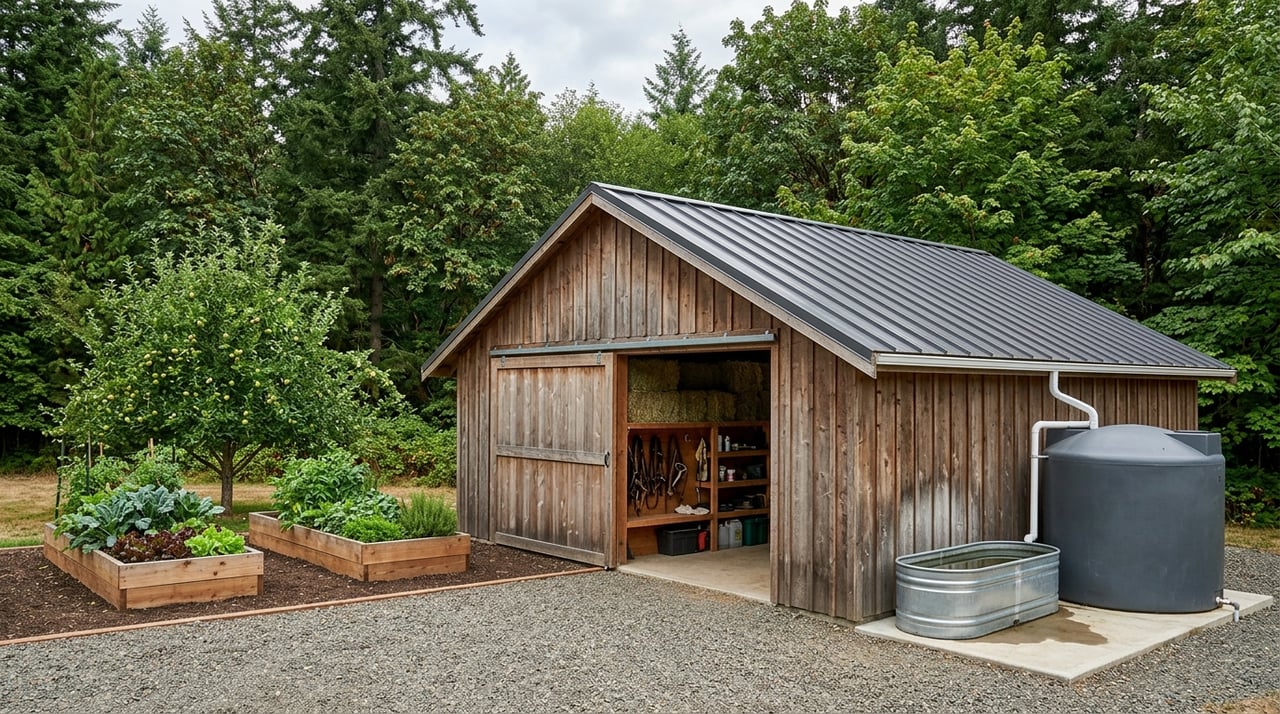
In Douglas County, a small hobby farm is usually less about running a large-scale farm operation and more about creating a functional rural home base. In practical terms, many buyers are looking for a house with a few usable acres, some fencing or pasture, a garden or orchard area, and one or two outbuildings for storage, feed, tack, or workshop space.
That picture lines up with the county's rural residential zoning framework. Douglas County's Land Use and Development Ordinance includes Rural Residential-5, Rural Residential-2, and Rural Residential-1 districts. These zones are intended for low-density rural homesites and open-space settings, often in areas that transition between residential development and agricultural or timber land.
The code also allows a single-family home with accessory buildings such as garages, storerooms, woodsheds, greenhouses, hobby shops, and animal or fowl shelters. Farm use and animals are also contemplated, subject to acreage-based limits. That matters because a property can feel rural and useful without needing to function as a full commercial farm.
For buyers who want room for horses, Douglas County stands out in a practical way. The county's land-use definitions specifically include equine activity in farm use, including stabling or training equines, riding lessons, and training clinics. That does not replace parcel-specific due diligence, but it does show that horse-oriented uses are already part of the county's planning language.
For a horse property buyer, that kind of clarity is helpful. It means your search can focus on the details that matter most, like usable ground, access, fencing potential, water, and the layout of barns or shelters, rather than assuming the county treats equine use as an unusual exception.
One of the biggest mistakes buyers make with rural property is assuming more acres automatically means more flexibility. In Oregon, rural land is defined as land outside an urban growth boundary, and counties handle the rules for how that land can be used. In Douglas County, that means the right hobby-farm property is tied to zoning, parcel characteristics, and infrastructure, not just lot size.
The county's zoning rules govern land use, setbacks, lot occupancy, and building size. A parcel might look perfect at first glance, but you still need to confirm what its actual zone allows. Rural development here is not one broad category, so the details matter.
This is often where having a calm, step-by-step plan helps. Instead of falling in love with a listing based on the photos alone, it is smart to ask how the property functions on paper and on the ground.
If you are shopping for a small hobby farm in Douglas County, water is one of the first practical questions to answer. The county notes that private drinking-water systems such as wells and springs are not monitored like public systems and should be tested regularly. The county also says it maintains septic records and a septic-permit program, which can be important when you are evaluating a rural home.
Oregon Health Authority guidance adds another key point for buyers. Domestic wells must be tested during real estate transactions. That requirement makes water quality more than a nice-to-know detail. It is part of understanding the property's everyday livability.
Water availability also matters beyond the house itself. Douglas County reported 17,489 irrigated acres in the 2022 Census of Agriculture, which is only 5% of land in farms. That is a good reminder that irrigation exists here, but it is not universal, so you will want to understand how a property supports pasture, gardens, or animals during the dry season.
The local climate helps explain why rural buyers in Douglas County pay so much attention to wells, pasture, drainage, and outbuildings. At Roseburg Regional Airport, NOAA's 1991 to 2020 climate normals show about 32.07 inches of annual precipitation. The pattern is strongly seasonal, with December averaging 6.05 inches and January 4.82 inches, while July and August average just 0.26 and 0.23 inches.
Temperatures follow that rhythm too. Mean daily highs rise into the mid-80s in July and August and drop into the upper 40s and low 50s in winter. In simple terms, you are looking at a place where winter moisture and summer dryness both shape how land gets used.
That seasonal pattern affects everyday property decisions. Wet months can make drainage, driveway condition, and mud management more important, while dry months can put more attention on watering, pasture care, and feed storage. If you are buying acreage, the goal is to picture the property in every season, not just on the sunny showing day.
A property can look ideal online and still have limitations that affect where you can build, park, fence, or expand. Douglas County's rural-living guidance says homes and improvements should fit the natural environment, with attention to floodplains, geologic conditions, wildfire susceptibility, wildlife corridors, and emergency access.
That same guidance also says driveway placement should minimize cuts and fill and must follow county permit requirements. For buyers, this is a practical reminder that access is not just about whether a road exists. It is also about how safely and efficiently you can use the site over time.
When you put all of that together, the best rural properties usually feel good for a reason. They do not just offer scenic space. They also work for access, water, layout, and county development standards.
If you want to stay focused during your search, it helps to evaluate each property with the same basic checklist. That can keep you from getting distracted by cosmetic features and help you compare properties more clearly.
These questions do not make the process harder. They make it clearer. That is especially important if you are relocating, buying from out of the area, or trying to balance lifestyle goals with a realistic budget.
The good news is that Douglas County truly can support the dream of a small hobby farm. The county's rural zoning framework, agricultural footprint, and equine-friendly planning language all point to a place where rural living is a real part of the local market. This is not just a fantasy buyers bring with them. It is a lifestyle that fits the area.
The key is matching the dream to the right property, not just to the county name. A beautiful parcel still needs the right zone, workable water and septic setup, practical access, and land that supports how you want to live. When you approach the search with that mindset, you give yourself a much better chance of finding a property that feels right now and still works well later.
If you are thinking about acreage, horse property, or a small hobby farm in Douglas County, a clear plan can save you time and stress. Gina Evenich can help you sort through the details, compare properties, and move forward with steady guidance that keeps your goals and the paperwork in focus.
From first-time buyers to seasoned investors, we treat every client’s goal as our own. We pride ourselves on strong communication and a detail-oriented approach that protects your interests at every turn. Reach out to us for a supportive, professional real estate experience.