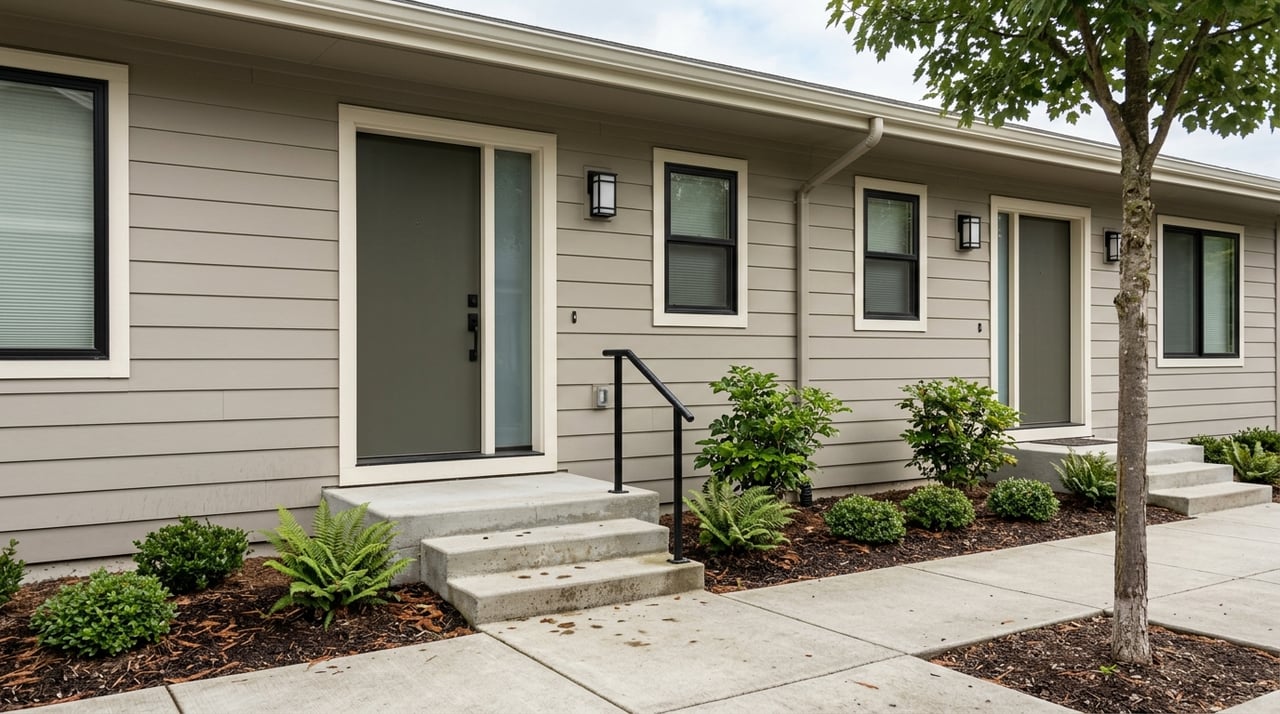
Condo And Townhome Living Options In Roseburg
July 9, 2026
July 9, 2026
Looking for a home in Roseburg with less exterior upkeep and a simpler day-to-day routine? Condo and townhome living can be a smart fit if you want homeownership without taking on as much yard work or exterior maintenance on your own. In this guide, you’ll get a clear look at the attached-home market in Roseburg, how condo and townhome ownership works in Oregon, and what to review before you make an offer. Let’s dive in.
Roseburg has a relatively small attached-home market, which means available options can be limited at any given time. Current listing snapshots show just a handful of condos and townhomes in Roseburg, while Douglas County overall also has a modest number of condo listings and townhouses on the market.
That smaller inventory can matter if you are trying to compare price, dues, and amenities. With fewer choices, it helps to look closely at each property’s ownership structure, monthly costs, and maintenance setup instead of assuming one condo or townhome is much like another.
Recent market snapshots show Roseburg with only a few active condo and townhome listings. At the Douglas County level, Redfin reported 5 condos for sale, a median condo listing price of $240,000, and 15 townhouses on the market in the last month.
For buyers, that points to a niche but active segment of the local market. You may not see a large volume of attached homes at once, but there are options, and new ones do come up.
Roseburg’s planning activity also shows that attached housing is part of the city’s near-term supply. The City of Roseburg’s 2024 year-end report notes 45 new residential units went through site review, including 16 townhouse or duplex units.
That same report also references 14-unit townhomes in the Thyme Subdivision and a seven-lot Harrison Street subdivision designed for townhomes. For buyers who are open to newer attached housing, that is a sign this part of the market may continue to grow.
One of the most important things to understand is that a condo and a townhome are not always the same thing legally. In Oregon, a condominium is a specific form of ownership governed by ORS chapter 100 and reviewed by the Oregon Real Estate Agency.
With a condominium, you own your unit and also hold an undivided interest in the common elements. Those common elements can include things like roofs, foundations, stairways, landscaping, utility services, and parking areas, and the association manages the project.
In Roseburg, some listings use both “townhouse” and “condominium” to describe the same property. That means the exterior style alone does not tell you how ownership is structured.
If you are considering an attached home, it is important to verify the recorded declaration, deed, and association documents. That step gives you a clearer picture of what you own directly, what the association maintains, and what rules apply.
In a condominium, every owner is automatically a member of the association. The association is there to manage the shared parts of the project and handle responsibilities laid out in the governing documents.
Oregon law also requires reserve planning and annual budgeting for planned communities and condominiums. That matters because reserve accounts help fund major maintenance, repair, and replacement of common property over time.
One big reason buyers consider condos and townhomes is the potential for a lower-maintenance lifestyle. In Roseburg, current listings show that dues can cover a wide range of services, but there is no one standard package.
For example, one local attached-home listing showed a monthly fee of $245 that included exterior maintenance, front-yard landscaping, and trash. Another local condo listed a $325 monthly fee that covered water, sewer, garbage, yard maintenance, pest control, and exterior roof, gutter, and garage-door maintenance.
Some communities offer more than basic maintenance. A Spyglass condo listing described access to a community pool, while also noting landscaping, grounds, and road maintenance as part of the HOA structure.
That range is why it is important to compare properties based on what the dues actually include. A higher monthly fee may come with services or amenities that meaningfully reduce your personal upkeep and surprise repair exposure.
Local attached-home dues in the research sample ranged from $245 to $450 per month. Those dues are usually separate from your mortgage payment, so they should be treated as part of your true monthly housing cost.
When you are comparing a condo or townhome to a detached house, look at the full picture. Your monthly payment, dues, insurance responsibilities, and expected maintenance should all be part of the decision.
For many buyers, the appeal is practical. An attached home can offer a simpler maintenance routine, less yard work, and a more structured approach to exterior upkeep.
That can be especially attractive if you are a first-time buyer, downsizing, traveling often, or simply want fewer home maintenance tasks on your plate. In the right community, condo and townhome living can make ownership feel more manageable.
No home is completely maintenance-free, but attached living can make some costs and responsibilities more predictable. If the association handles items like landscaping, exterior repair, or roof-related work, you may have fewer large exterior tasks to coordinate yourself.
That said, predictability only helps if you understand the rules and finances ahead of time. A clear review of the association documents is what helps turn a convenient-looking option into a well-informed purchase.
Before you write an offer on a Roseburg condo or townhome, slow down and look beyond the list price. The monthly dues, the association’s financial health, and the ownership documents can affect your day-to-day experience just as much as the home’s layout or finishes.
A careful review is especially important in a smaller market, where properties may vary a lot from one community to the next. This is where steady guidance and contract detail really matter.
Start with the basics. Ask for a clear breakdown of what the HOA fee includes.
Important items to confirm include:
Oregon law requires associations to maintain records such as the current budget, reserve study, maintenance plan, declaration, and bylaws. These documents can tell you a lot about how the community is managed.
You will want to review:
Rules can matter just as much as monthly cost. Governing documents may address pets, rentals, parking, occupancy limits, and exterior changes.
Under Oregon condominium law, written board approval is generally required before a unit owner changes the exterior appearance of a unit unless the declaration or bylaws say otherwise. If you have specific plans for parking, pets, visitors, or updates, review those rules early.
If you are financing a condo purchase, the property itself may go through an additional layer of review. The research report notes that condo project standards can involve review of project budgets, financial statements, and reserve studies before a lender can deliver a loan secured by a condo unit.
That does not mean financing is out of reach. It simply means that association paperwork and project details may play a meaningful role in your timeline and approval process.
If you are serious about buying a condo or townhome in Roseburg, it helps to prepare early. Ask questions up front, request documents promptly, and compare more than just square footage and price.
That approach can help you avoid surprises later in the transaction. It can also give you more confidence that the home fits both your budget and your day-to-day goals.
The best fit depends on what kind of ownership experience you want. If you value less yard work, shared maintenance responsibilities, and a potentially more predictable exterior upkeep plan, an attached home may be worth a closer look.
If you prefer full control over exterior decisions and want to avoid monthly association dues, a detached home may still be a better match. The key is understanding the tradeoffs clearly before you commit.
In Roseburg, condo and townhome options are limited but meaningful, and the details can vary widely from one community to another. If you want help comparing attached-home choices, reviewing what dues really mean, or understanding how a specific property is structured, Gina Evenich can help you move forward with clear, steady guidance.
From first-time buyers to seasoned investors, we treat every client’s goal as our own. We pride ourselves on strong communication and a detail-oriented approach that protects your interests at every turn. Reach out to us for a supportive, professional real estate experience.